
Notes to
Management
RECOMMENDATIONS TO IMPROVE ADB AS AN ORGANIZATION
scroll
scroll
Following a thorough analysis of the Office of the Ombudsperson’s data for 2023, several critical and interconnected areas for improvement emerged. Central to these findings is the imperative need to cultivate a culture of mentorship within our organization.
One key approach to achieving this is the development of a robust and comprehensive mentorship program, which would significantly enhance team dynamics, communication, and overall organizational well-being.
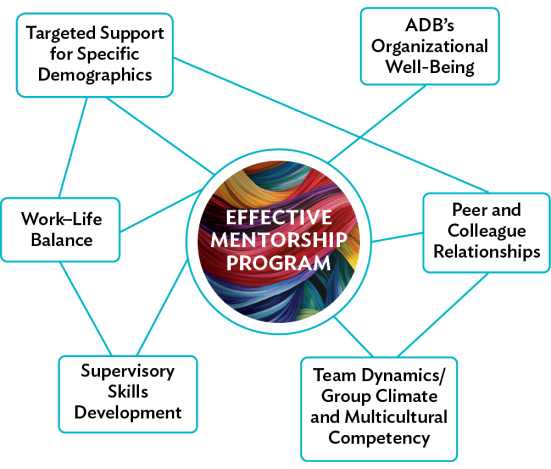
Dynamics of an Effective Mentorship Program
Why Mentorship?
The primary objective is to cultivate a culture of mentorship within ADB, integrating it deeply into the organizational fabric. The changes brought about by the new operating model (NOM) have highlighted gaps that necessitate a cultural change.
The Office of the Ombudsperson has increasingly encountered group conflicts, especially between supervisors and supervisees. These conflicts often stem from poor communication, lack of support, and inadequate conflict resolution skills. In our opinion, a structured mentorship program can proactively address these issues by training supervisors to manage their teams more effectively. Studies have shown that mentorship programs improve communication and conflict resolution skills, leading to a more cohesive and supportive work environment.
Additionally, mentoring programs help develop a pipeline of talented and skilled individuals within the organization that contributes to long-term success. Such programs may also encourage knowledge- and skill-sharing among staff, creating a culture of learning and collaboration within the organization. This leads to higher staff engagement and productivity, which may ultimately impact the overall organizational health positively.

By fostering an environment where supervisors extend their roles beyond traditional deliverables to include the professional growth of their staff, we can ensure that mentorship becomes a key component of our operational ethos.
Currently, the existing mentorship program at ADB is primarily focused on onboarding rather than on comprehensive staff development. By shifting this focus, we can hope to empower members of the ADB community to achieve greater personal and organizational success, as well as fulfillment in their careers. The figure below illustrates why an effective mentorship program is important.
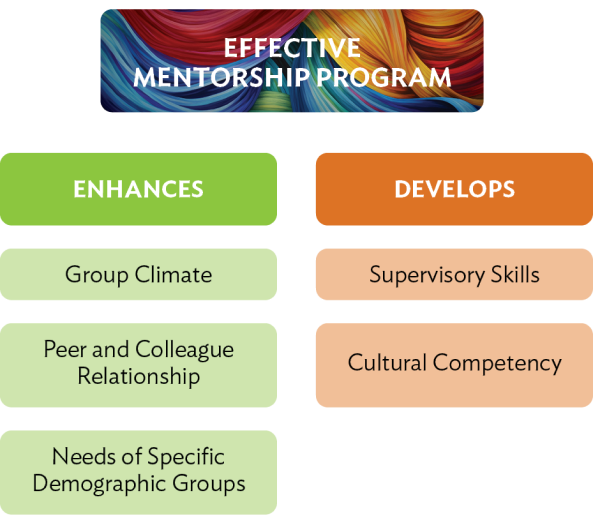
Results of an Effective
Mentorship Program

Implications for Group Climate
A poor group climate, often resulting from conflicts between colleagues, can arise because of inadequate managerial skills and conflict resolution abilities. Fostering an inclusive learning culture through mentorship resources and a supportive environment may promote collaboration and a positive group climate across differences. Research indicates that organizations with strong mentorship programs see marked improvements in team dynamics and organizational climate.
Enhancing Team Dynamics, Communication, and Respect
Prioritizing initiatives to improve team dynamics and communication is crucial. Our suggestion is to focus components of the mentorship program on developing multicultural competency, which is vital for fostering respect and creating a cohesive workforce.
According to research, organizations that prioritize multicultural competency witness improved employee satisfaction and performance. This finding underscores the importance of incorporating multicultural competency training within mentorship programs to enhance overall team cohesion and respect among employees.
Strengthening Supervisory Skills
Deficiencies in supervisory skills, such as communication, conflict management, and providing empathetic support, contribute to group conflicts and a strained work environment. Mentorship initiatives, focused on leadership development, can equip supervisors with critical skills, including emotional intelligence, to lead and mentor their teams effectively.
Enhanced supervisory capabilities, gained through mentoring, can significantly improve peer and colleague relationships and better support the specific needs of different groups. Incorporating mentorship into leadership development programs can prepare current and future leaders to lead inclusively in a multicultural environment, fostering enhanced leadership abilities. It can also provide valuable perspectives. This integration is pivotal for developing a pipeline of leaders who are adept at managing diverse teams, as mentors gain significant career-related benefits, including improved managerial and leadership capabilities.
Addressing the Needs of Diverse Demographic Groups
Gender-responsive mentoring promotes diversity and equality in the organizational culture, fostering a more inclusive and innovative work environment. Targeted mentorship programs can support specific groups, such as women and new employees, to ensure that their unique needs are addressed. These needs relate to, for example, career growth, integration, and overcoming any barriers they may face. In addition, cross-cultural mentoring may enhance multicultural competency and promote empathy and respect among members of the ADB community.
By specifically implementing gender-responsive mentoring programs, we can create a supportive and inclusive environment that empowers women to reach their full potential while driving positive organizational outcomes. As evidenced by the United Nations (UN) mentoring and networking program, Together, such programs can benefit both women and the organization in several ways.
Women mentees can receive support, guidance, and advice from mentors who understand their unique challenges and experiences. Other female mentors can understand the challenges of balancing career and caregiving responsibilities, providing valuable insights and support.

Mentoring can also provide women with access to management networks, helping them advance their careers while developing leadership skills, increasing confidence, and navigating gender-specific challenges in the workplace. Including the LGBTQ+ perspective in these programs is particularly beneficial, as these individuals often face difficulties in the workplace.
Research has shown that LGBTQ+ inclusive mentoring can significantly enhance career satisfaction and reduce experiences of discrimination. In addition, involving women in designing and leading mentoring programs, as evidenced by the UN, can empower them and provide leadership opportunities. Investing in women through mentoring can lead to increased productivity and organizational effectiveness.
Developing Multicultural Competency
An individual’s culture decides how, what, and with whom they communicate. However, because communication is learned at the earlier stages of life, people are oftentimes unaware of how their culture influences their communication styles. Not surprisingly, misunderstandings can arise when they interact with individuals from cultures and norms that are different from their own.
As a multilateral organization with staff from diverse backgrounds, implementing formal cross-cultural mentoring programs, or adding cultural competency training as part of the existing mentorship program, may help build mutual understanding and inclusive mindsets that are essential for effective cross-cultural communication and collaboration at ADB. As an example, mentors and mentees could be strategically matched across different nationalities, ethnicities, genders, etc., to foster inclusion and knowledge sharing across cultures.
Mentors and mentees may gain mutual understanding, appreciation for diversity, and skills for cross-cultural communication, thereby positively influencing the overall workplace culture as well as promoting greater inclusion through improved interpersonal relationships and organizational cohesion.
Enhancing Work-Life Balance
Work-life balance is positively related to job satisfaction and well-being. Providing mental wellness and stress management resources through mentorship initiatives may support employees in achieving a healthier work-life balance, leading to increased productivity and job satisfaction.
Conclusion
In summary, these intersecting elements of an effective mentorship program have a synergistic effect—enhancing group climate, strengthening supervisory capabilities, bridging gaps in peer relationships, catering to demographic-specific needs, and cultivating an organizational culture that encourages multicultural competency and inclusion.
Implementing a structured cross-cultural component within the mentorship program aligns with ADB’s values of inclusion and development. By connecting people across differences and providing mutual mentorship benefits, we can drive staff engagement, advancement, and the organization’s overall success. Drawing on best practices from leading organizations, such as the UN, we can develop a comprehensive mentorship program that not only supports our staff but also aligns with our strategic objectives of driving both individual and organizational success.