The Weight of Family Duty
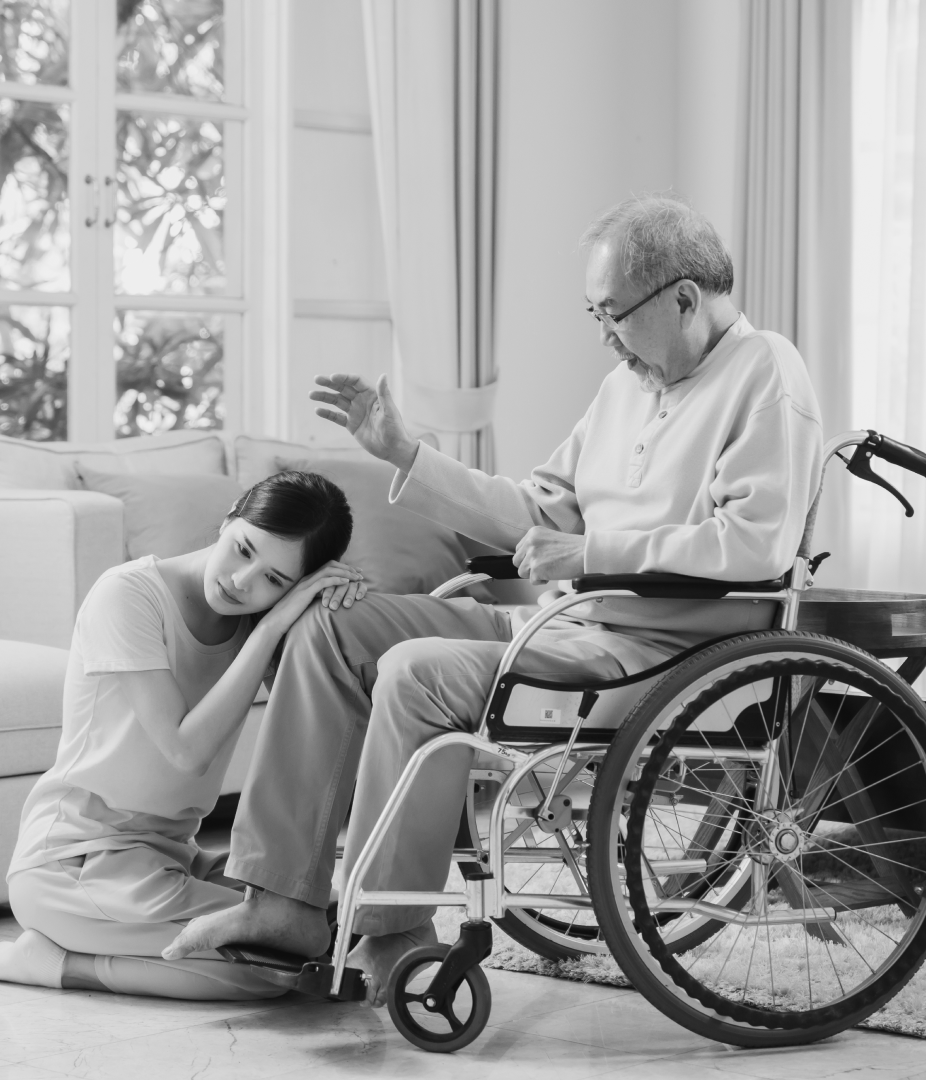
Caught in the whirlwind of work demands, responsibilities of caring for her ailing parent, and the nonstop frenzy of family life, Agonia feels trapped in a never-ending storm.
scroll
scroll
Caught in the whirlwind of work demands, responsibilities of caring for her ailing parent, and the nonstop frenzy of family life, Agonia feels trapped in a never-ending storm.
Mora feels uneasy as her promotion to lead the team turned into a challenging experience, particularly due to the difficulty of dealing with colleagues Calista and Titus, who came with formidable reputations.
In this episode, you will play the role of Aveza as we explore the challenges of navigating a toxic work environment marked by interpersonal conflict and passive-aggressive behavior.
You will be presented with options on how to handle the situation.
Choose a response and see how the situation plays out.
Listen to the Ombuds perspective
for insights and guidance on how to handle similar
situations.
Aveza, an international staff member, couldn’t shake the feeling of hostility that now colored all his interactions with Marie, a long-standing national staff member at headquarters. Their professional disagreements had soon turned personal, with Aveza feeling like he was walking on eggshells around Marie. As their conflict persisted, team dynamics also began to suffer. One morning, Aveza approaches Marie seeking to understand and, potentially, improve a process he deems outdated. This interaction quickly turns into a disagreement.
Calmly apologize and discuss the issue with Marie later.
Walk away.
Insist you’re not yelling and that Marie is being over-sensitive.
Wayne: In this episode, Agonia navigates the intricate balance between familial responsibilities and professional expectations, while her colleague Miyu struggles to empathize with her personal challenges.
Agonia: It has been one heck of a week. Seriously, chaos seems to be my best friend lately. Juggling work, taking care of Dad, wrangling with the kids … it’s like I’m stuck in a crazy whirlwind. It’s so tough to see Dad like this. Managing his doctors’ appointments, treatments, and just trying my best to be there for him … on top of that, it’s a never-ending cycle with the kids and their tantrums and demands … I just can’t catch a break, you know.
Now, with Dad’s dementia creeping in, it’s like a dark cloud hangs over every single thing. I’m always worrying about him. And about work, and the kids, and everything else in between. If that isn’t enough, there’s Miyu. She’s constantly been on my case at work and thinks I’m not pulling my weight. All the deadlines aren’t helping either. She and I used to get along just fine. But lately she’s just breathing down my neck and I hate it. We butt heads almost all the time.
I get it, we all have expectations to fulfill, and deadlines to meet. But with so much going on in my life—Dad’s health, the kids, and just trying to keep my head above the water—sometimes I just can’t do it all. Miyu doesn’t seem to see it that way. She’s all about business. And yes, I respect that, I really do. But it’s like she has blinders on and can’t see beyond deliverables. Or notice that we are all humans and need support sometimes.
I wish I could make her understand what’s going on in my life, and why I’m not always on top of my game. But I’m afraid she’ll just brush it off, thinking I’m making excuses. I don’t think anyone gets it. Not my colleagues, not my friends. And my family, scattered all over the globe, they don’t get it either.
I’m just in it alone.
Wayne:This narrative explores the theme of interpersonal conflict stemming from conflicting perspectives on work-life balance and professional commitments. At the Office of the Ombudsperson, we’ve witnessed how members of our community have dealt with the complex challenges of elder care. We have noted significant effects of these challenges on staff morale, interpersonal conflicts, workload, and concerns about mental health and well-being.
In elder care, children navigate a complex web of responsibilities such as quality health care, securing reliable care providers, managing family dynamics, managing geographical distance from aging parents, and providing emotional support to family members. Interestingly, this responsibility is often seen as a “duty of care” predominantly shouldered by women. They have been the driving force behind many of our conversations on this matter.
Balancing work and personal life can sometimes feel like walking on a tightrope. Conflicts with siblings or other family members can further complicate the caregiving journey, adding emotional strain to an already challenging situation. We have provided guidance and support on multiple occasions to many individuals as they navigate the challenges of elder care. Addressing elder care requires continuous problem-solving efforts—or putting out fires—if you will. Despite efforts to establish support systems, individuals may still feel they are at the mercy of external factors, particularly those who are direct caregivers.
They often feel isolated. This is especially true for women who feel unsupported by family members in managing elder care responsibilities. As we contemplate gender initiatives, it’s crucial to conduct a comprehensive review of ADB’s demographic data to understand what segment of our community faces these challenges and inform proactive planning strategies.
Recognizing the evolving nature of caregiving demands, our policies and practices at ADB must remain adaptable and progressive. Approaching elder care through the lenses of recruitment, retention, and risk mitigation is vital for fostering a supportive organizational environment. Flexibility in policy implementation will empower our community members to effectively address their emerging challenges, including those related to elder care.
Wayne: This episode follows Mora’s struggles in her new leadership role, due to the challenges posed by her colleagues, Calista and Titus. The themes include the importance of effective communication and support within teams, and the frustrations of feeling isolated and unsupported in a demanding role.
Mora: When I first stepped into this new role, I was excited and optimistic. Leading my team through the changes brought about by the New Operating Model seemed like a great opportunity for growth and development. But I had no idea what I was really getting myself into.
Calista and Titus. Just the mention of their names makes me break out in hives. Even before I officially took on my role, warnings about them were already swirling around the office. “Watch out for Calista and Titus,” everyone said. And believe me, I tried to take those warnings seriously, but nothing could have prepared me for what was coming up. First there’s Calista, with her stubborn ways and refusal to see things from anyone else’s perspective. Every conversation with her feels like I’m hitting my head against a wall. And then there’s Titus, who absolutely refuses to accept any form of feedback or guidance, and just goes on doing everything exactly as he wants to.
Some of my colleagues just don’t want to deal with them. They avoid them altogether. Like that is supposed to make things smooth. It only makes everything worse! Because no one actually talks to each other! It makes coordination a nightmare. And I am in the middle of all this, trying to navigate this entire mess. It’s so frustrating!
And the worst part? It feels like I’m on my own in this. I tried to bring this up with my supervisor. I was hoping for some guidance, some support. But instead, all I got was a reminder that it was my responsibility to manage them. As if I can flick a switch – and they will both magically behave better! It’s like my supervisor just washed their hands off the entire situation and fed me to the wolves: no strategy, no advice on how to handle Calista and Titus’s behavior, nothing. Just a pat on the back, and a “good luck”. It’s so disheartening.
I mean, isn’t that what supervisors are supposed to do? Support their team members? Especially when they’re facing challenges like this? But instead, I’m left feeling like I’m completely drowning in this mess, with no lifeline in sight.
Wayne: As we delve into these issues, it's evident that they're not unique to ADB. And these issues have persisted even before the implementation of the new operating model. However, NOM has undoubtedly amplified these challenges. Women, in particular, have voiced a significant portion of related concerns that have reached our office.
Within ADB's organizational culture, there's a prevailing pattern of avoidance. Individuals hesitate to engage in necessary but difficult conversations. They avoid making tough decisions and providing honest and constructive professional development feedback. There’s also a tendency to shuffle individuals between teams, rather than address underlying issues of inappropriate behavior.
We've also identified a gap in the lack of a robust mentorship program. Supervisors often fail to follow through on providing professional development opportunities and support to their staff, stunting talent growth. The performance review process can regress into a check-the-box exercise for supervisors, lacking integration into a holistic approach to professional development.
ADB could benefit from fostering a culture of professional development, where all supervisors, regardless of their position, are expected to engage in meaningful staff development as part of their work plan. There should also be accountability measures for failure to follow through.
It's important to recognize from the outset that the supervisory role extends beyond international staff members, as national staff and some administrative staff also often assume informal supervisory responsibilities. Staff members labeled as "problematic" often perceive themselves as targeted or bullied by their supervisors when receiving honest professional development feedback for the first time. They struggle to recognize gaps in their performance and attitude. Instead, they attribute the issues solely to their supervisor or a new supervisor.
The lack of past feedback and accountability undermines the legitimacy of any new concerns raised by their supervisors. When confronted with concerns from team members, these staff members often demand names and proof, further undermining the credibility of the feedback. Although they are entitled to honest feedback and support for success, they often get negative reputations that hinder their career advancement. Some "problem staff" are promoted to resolve team conflicts rather than addressing the underlying issues, resulting in resentment toward new supervisors.
Conflict between staff members and new supervisors can escalate. This results in a hostile work environment for the team. New supervisors may feel they were set up to fail. In some cases, staff members vying for leadership positions, believing they deserve them more, resort to passive-aggressive behaviors such as character assassination and undermining. This leads to organized or coordinated "bullying up”. In summary, these issues require careful consideration and proactive steps to ensure a conducive and productive work environment at ADB.
Wayne: Our office has noticed a significant increase in interpersonal conflicts, that risk escalation and further complications for entire teams. We've received numerous requests for assistance with conflicts involving our local staff, particularly those from headquarters.
ADB's environment is complex, shaped by diverse national and regional cultures that influence its own unique organizational culture. Many international staff members, particularly newcomers, may struggle to grasp it, especially if they joined us during the pandemic or more recently. Those assuming proficiency in Asian culture can still make missteps in interacting with colleagues, and then feel subjected to subtle acts of bullying or exclusion from national staff. Power imbalances exacerbate these issues, fostering passive-aggressive behaviors and hindering conflict resolution.
International staff members express frustration with perceived hypersensitivity among local staff, hesitating to voice concerns or provide candid feedback. They feel unable to speak up or share honest opinions without facing repercussions or passive-aggressive behaviors. This reluctance perpetuates a culture of mediocrity, where challenging the status quo or introducing new ideas feels uncomfortable for everyone.
To address these challenges, the Office of the Ombudsperson coaches international staff on effective communication and inclusivity, while also training local staff to welcome diverse perspectives. However, pre-existing biases on both sides can complicate resolution efforts, making it harder to find common ground. Conflicts can impact mental health, worsened by workload pressures and integration challenges.
Moving forward, prioritizing multicultural competency is essential to foster inclusivity and support. It is also crucial to recognize that multicultural competency goes beyond mere awareness of cultural differences. It requires a deeper understanding and appreciation of diverse perspectives, communication styles, and behavioral norms. ADB must prioritize the development of multicultural competency among its staff members to navigate the complexities of its diverse workforce effectively.
Overcoming these challenges requires a collective effort from the entire ADB community. By fostering an environment that values diverse perspectives, encourages collaboration, and upholds mutual respect as fundamental principles, ADB can truly thrive as an inclusive and innovative organization.
Effective and productive teams hinge on a shared understanding and commitment to common goals. This involves leveraging diverse perspectives and experiences towards achieving objectives. A meaningful apology holds significant power, fostering collaboration. Embracing "cultural patience" acknowledges learning curves and allows for reasonable mistakes, crucial in navigating organizational and national cultures. Respectfully addressing cross-cultural misunderstandings promotes collegiality and smooth integration for new team members.
Cultural slights, whether within an organization or on a national level, often cut deeply. Many choose to avoid addressing these issues directly, preferring to sidestep potentially uncomfortable conversations. Consequently, feelings of disrespect and underappreciation can persist and intensify, leading to inadvertent "passive-aggressive" behaviors. This may extend to discussing their grievances with others who are sympathetic, inadvertently ostracizing new team members unaware of their missteps or the resulting consequences. Such dynamics significantly impact the cohesion and effectiveness of the entire team or organization.
The perception of being shouted at illustrates how national and organizational cultures impact interpersonal dynamics. Shouting may be perceived as raised voices or unjust criticisms. Nonverbal cues like eye-rolling or dismissive gestures further exacerbate feelings of disrespect. Debating whether shouting occurred detracts from addressing the underlying issues: one or both persons are feeling unheard, dismissed, or marginalized. To address this, all parties should pause, understand the cultural dynamics, and focus on constructive communication. Don’t waste time, effort, and emotional well-being on arguing who shouted when. Instead, spend the energy to find a meaningful resolution and to repair the relationship.